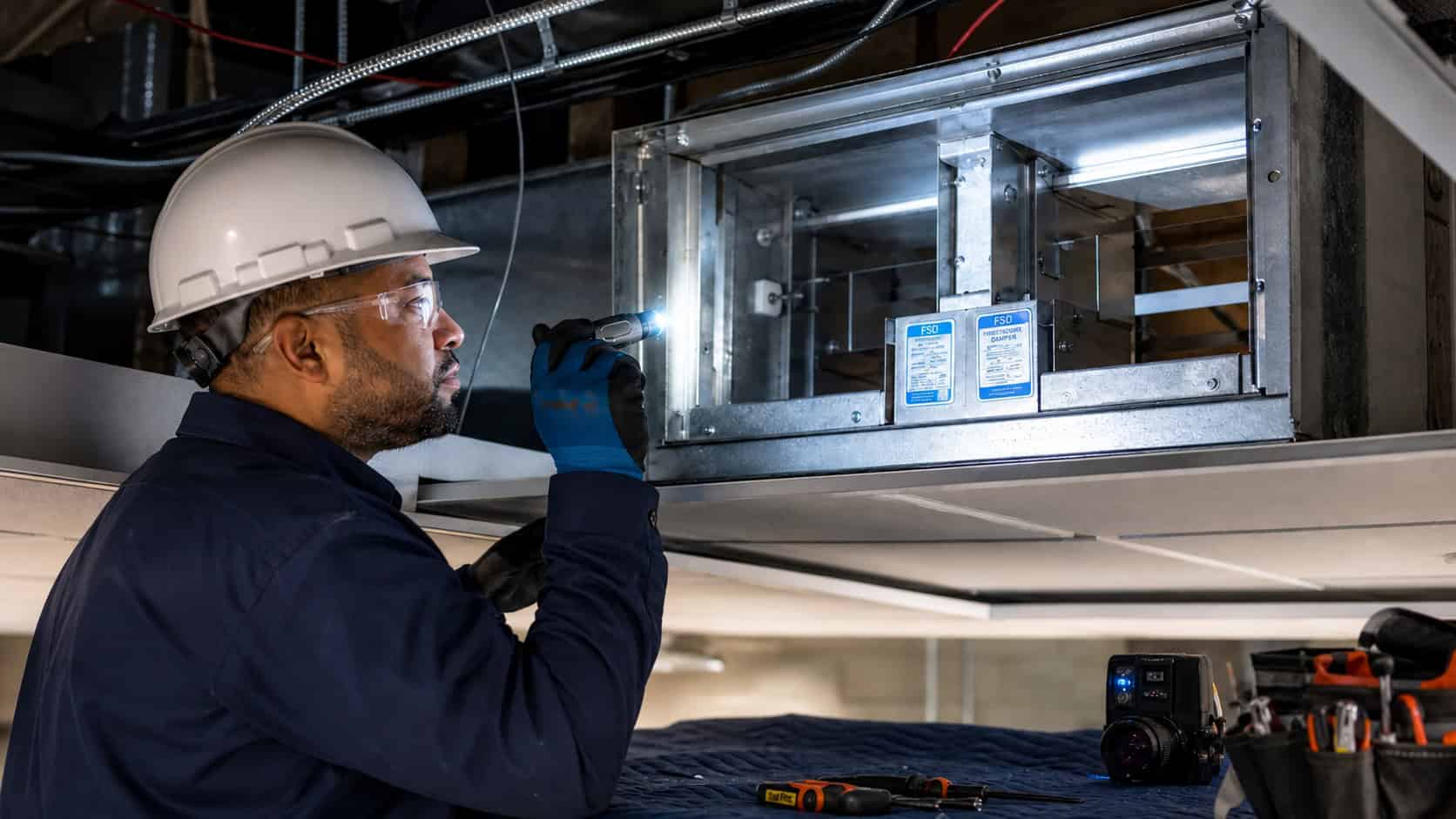
A practical refresher on assessing risks, choosing precautions, and keeping construction hazards contained.
Renovating a hospital isn’t just about blueprints and hard hats. It’s about protecting the patients receiving care on the other side of the construction barrier.
From major demolition to routine maintenance, work that disturbs dust or building materials can introduce infection risks. The **ASHE ICRA 2.0® Toolkit—Infection Control Risk Assessment—**provides a structured framework for identifying those risks and selecting appropriate precautions before work begins.
Why ICRA 2.0 Matters
ICRA 2.0 builds on the original assessment approach with clearer activity descriptions, more detailed precautions, and an emphasis on coordination among infection prevention, facilities, construction, and clinical teams.
The matrix helps teams connect the work being performed with the vulnerability of the people it could affect. It supports professional judgment and a consistent planning process.
Start With Three Key Questions
The first three steps help establish the appropriate class of precautions:
- What work will take place?
Identify the activity type, from Type A through Type D. Type A includes inspection and noninvasive activities, such as limited ceiling-tile removal for visual inspection. Major demolition and construction fall under Type D. Classify the actual scope of work rather than relying on the project’s name or apparent size. - Who could be affected?
Identify the patient risk group, from Low to Highest. A non-patient-care office presents different concerns than an area serving highly immunocompromised patients. When multiple risk groups are affected, use the higher risk group. - What precautions are needed?
Match the activity type and patient risk group to determine the initial Class of Precautions, I through V. These classes establish progressively more protective measures for containment, airflow, cleaning, and movement of workers and materials.
The assessment continues beyond these three questions. Teams must also evaluate surrounding spaces—including areas above, below, and beside the project—and consider how the work could affect building systems and patient care.
For minor, low-risk tasks, a facility’s established assessment process may allow predetermined protective practices.
Three Practical Areas to Check
An approved assessment is only effective when its precautions are maintained throughout the project.
Documentation and communication
Are the assessment, required approvals, and applicable permit complete and available? Do staff and contractors understand the controls? ASHE’s matrix calls for permit approval for Class III precautions involving Type C activities and for all Class IV and V projects. Follow facility requirements for posting and access.
Containment and airflow
Are barriers secure and penetrations sealed? Where negative pressure is required, is it maintained and monitored? ASHE specifies negative-pressure controls for Classes IV and V. Certain Class III projects must incorporate Class IV negative-air requirements when the work area cannot be sealed and completely isolated from occupied patient-care spaces.
Cleaning and traffic control
Are debris containers clean and covered? Are workers preventing dust from leaving the site? Where adhesive mats are used under facility policy, are they changed routinely and whenever visibly soiled?
Understand the Compliance Connection
Joint Commission requires a preconstruction risk assessment process, but it does not prescribe one specific assessment method. ASHE ICRA 2.0 is a tool facilities can use to support that process.
Infection prevention is also one part of a broader assessment that addresses utilities, noise, vibration, and other hazards affecting care. Precautions should be monitored and adjusted as conditions change.
Everyone Has a Role
If you see a containment door propped open, a damaged barrier, or dust entering an occupied hallway, report it promptly through your facility’s established process.
Protecting patients takes more than completing a form. It requires a coordinated team, precautions matched to the work, and consistent attention from planning through final cleaning and project closeout.
Explore the ASHE ICRA 2.0 Toolkit to review the matrix, assessment, and sample permit.