
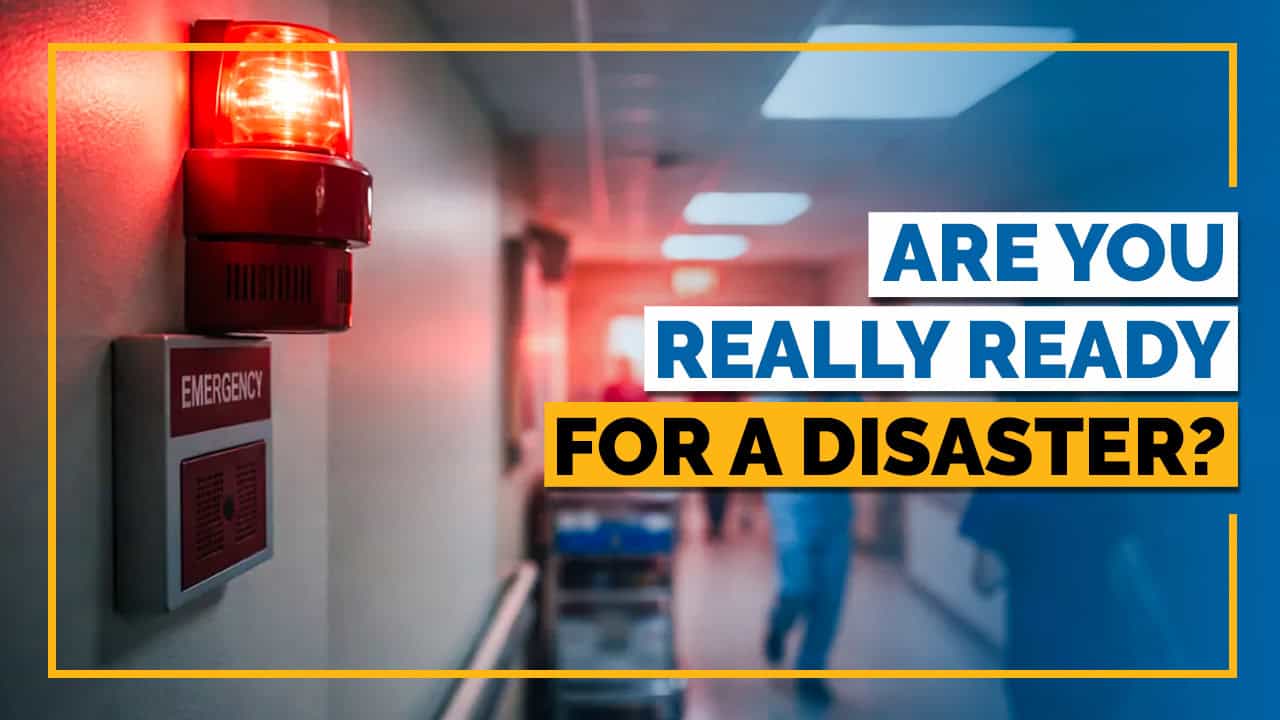
The Disaster Drill Dilemma (WITH VIDEO)

Emergency preparedness is one of those areas where it’s easy to feel confident—until you’re asked to prove it. Whether it’s a surveyor requesting documentation or a real-world event putting your plans to the test, many facilities discover that their drills haven’t actually prepared their teams for what matters most. In this video, we break down…

Written by

account-circle-fill
Wes Driver

Published on

BlogUncategorized

Emergency preparedness is one of those areas where it’s easy to feel confident—until you’re asked to prove it.

Whether it’s a surveyor requesting documentation or a real-world event putting your plans to the test, many facilities discover that their drills haven’t actually prepared their teams for what matters most.

In this video, we break down why so many disaster drills fall short and what real preparedness actually looks like:

  • The three most common disaster drill mistakes that weaken readiness
  • What surveyors actually look for during Emergency Management review
  • How to build drills around your Hazard Vulnerability Analysis (HVA)
  • Why documentation, participation, and follow-up matter more than scale
  • How to run drills that challenge decision-making without disrupting operations

Whether you’re preparing for a survey or evaluating how your team would respond in a real emergency, this video offers a practical, realistic approach to disaster drills that do more than check a box.
More From The Optix Blog

The Nuts and Bolts of Door Compliance (WITH VIDEO)

Let’s be honest—when it comes to life safety, doors don’t always get the attention they deserve. But surveyors notice them immediately. Once they start walking your halls, door issues quickly become one of the most cited—and most misunderstood—areas of compliance. That’s why in our latest video, “Making Sense of Door Compliance,” we’re breaking it down…
Read More

Firestopping and Barrier Integrity: What’s at Stake—and How to Protect It (WITH VIDEO)

It’s easy to think of fire barriers as static parts of the building—drywall, shafts, above-ceiling space. But when it comes to life safety, these passive systems do some of the most critical work: they buy time. When a fire breaks out, compartmentalization matters. Smoke and flame need to be slowed, redirected, and contained. And that’s…
Read More

How To Handle Hazardous Materials (WITH VIDEO)

The truth is: hazardous waste isn’t just “lab stuff.” From batteries to bleach to aerosol cans, dangerous materials show up in all corners of a facility—and it only takes one wrong move to trigger a violation, a safety incident, or a costly citation. Whether it’s something flammable in the wrong storage bin or a secondary…
Read More