
Artificial intelligence (AI) is rapidly becoming an important tool for improving safety and security in hospitals. While AI will never replace trained clinicians, security professionals, or emergency responders, it can help hospitals identify risks earlier, respond more quickly, and make better-informed decisions.
Healthcare leaders aren’t adopting AI simply because it’s the latest technology—they’re responding to real-world challenges. As concerns about workplace violence continue to grow, hospitals across the country are investing in AI-powered weapons detection, intelligent video analytics, and predictive security tools to help identify threats before they become incidents.
As hospitals increasingly adopt AI-enabled weapons detection systems to address workplace violence, the National Fire Protection Association (NFPA) recently approved a Tentative Interim Amendment (TIA No. 1869) to NFPA 101, Life Safety Code, clarifying how weapons detection systems can be incorporated into healthcare facilities while maintaining life safety requirements. Though the Amendment is not AI-specific, it’s a clear signal that these kinds of technologies are becoming part of the broader conversation around hospital safety and regulatory compliance—not just security innovation.
Improving Physical Security
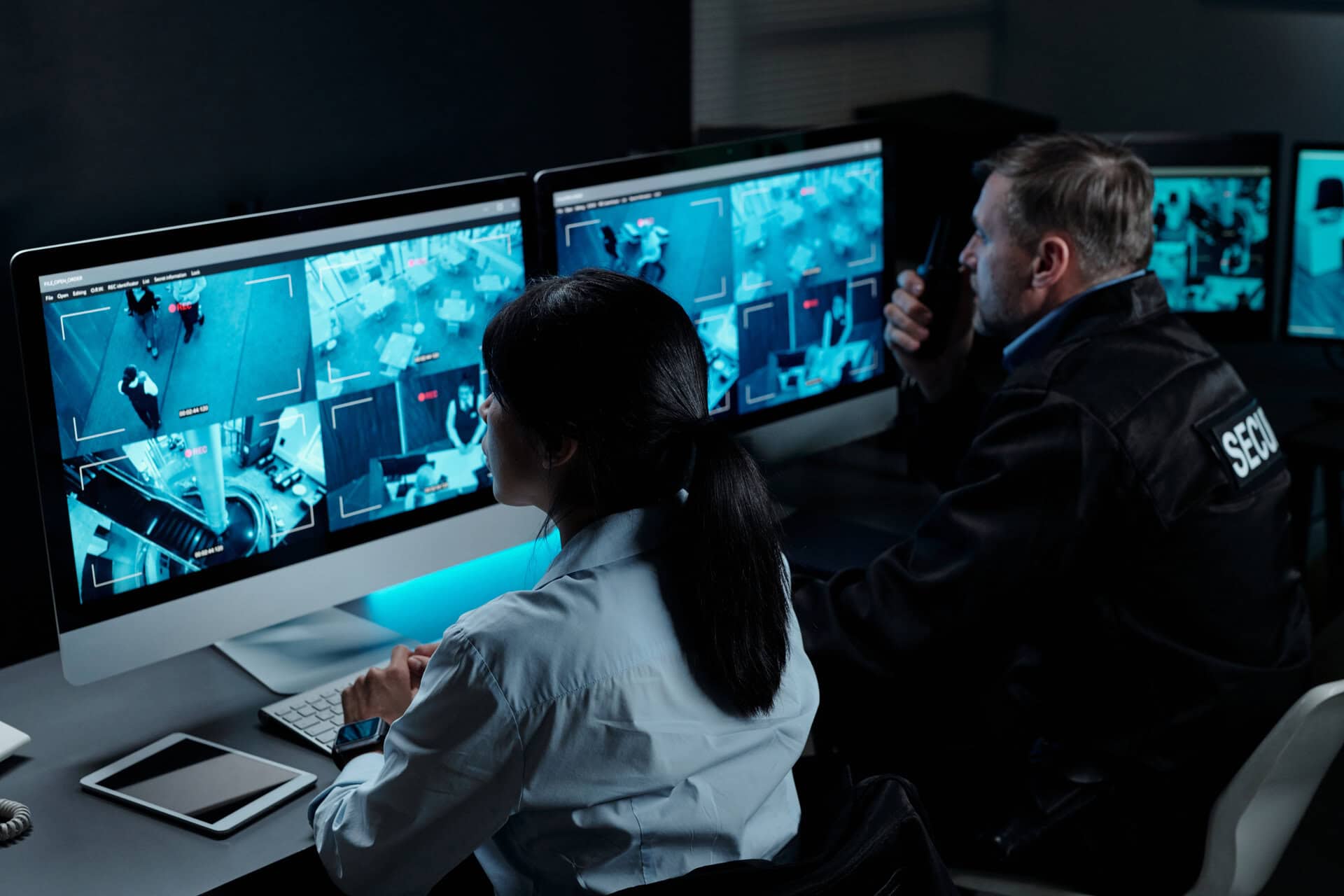
Hospitals are open, complex environments that must balance public access with security. Traditionally, surveillance cameras have served primarily as recording devices, requiring security personnel to review footage after an incident has already occurred. Today, AI-powered video analytics are transforming those systems into active safety tools by detecting events as they happen. Modern platforms can identify unauthorized access to restricted areas, unusual movement patterns, unattended objects, or activity in secure spaces after hours, then automatically alert the appropriate personnel with the relevant video attached.
The same technology is beginning to improve patient safety as well. Researchers recently demonstrated an AI video monitoring platform used across 11 hospital partners that can recognize when high-risk patients are left unattended, begin wandering, or make unsupervised movements associated with falls. Rather than replacing bedside care, these systems provide caregivers with earlier awareness so they can intervene before an incident occurs.
The key takeaway: AI works best as an additional layer of awareness. Whether identifying suspicious activity, recognizing patients at risk of wandering or falling, or alerting staff to potential security threats, AI helps hospitals respond sooner—but experienced healthcare and security professionals remain responsible for evaluating alerts, coordinating responses, and making critical decisions.
Supporting Workplace Violence Prevention
Workplace violence remains one of the most significant safety challenges facing healthcare workers.
AI can help organizations identify patterns in incident reports, detect emerging hotspots, support staffing and security deployment based on historical trends, and provide real-time alerts when suspicious behaviors or escalating situations are detected through approved security systems.
This is happening all across the industry. One recent example comes from New Mexico’s Gila Regional Medical Center, which announced the implementation of AI-powered weapons detection software alongside panic buttons, visitor management, and staff de-escalation training. The initiative illustrates an important lesson: AI delivers the greatest value when it’s integrated into a comprehensive workplace violence prevention program—not deployed as a standalone solution.
Enhancing Patient Safety
Beyond physical security, AI is helping clinicians recognize potential problems earlier and make more informed decisions. A study published recently in NEJM (New England Journal of Medicine) AI evaluated an AI-powered early warning system across 11 RWJBarnabas Health hospitals (in New Jersey) and more than 23,000 high-risk patients. The results were impressive:
- The AI identified patients at risk of clinical deterioration earlier.
- In-hospital deaths among high-risk patients decreased from 23.1% to 18.6% after implementation.
- That represented an 18% reduction in the risk-adjusted odds of death.
- Importantly, the AI did not make treatment decisions—it alerted clinicians earlier so they could intervene sooner.
Other current applications of AI include:
- Detection of potential medication safety concerns
- Analysis of safety event reports to identify recurring risks
- Recognition of trends across large datasets that may indicate emerging patient safety issues
These tools are designed to support clinical decision-making—not replace professional judgment.
Strengthening Cybersecurity
As hospitals become increasingly digital, cybersecurity is inseparable from patient safety.
AI is helping security teams detect unusual network activity, identify potential ransomware attacks earlier, prioritize security alerts, and automate portions of incident response.
At the same time, AI introduces new risks. Healthcare organizations must ensure AI systems are properly governed, protect patient information, monitor for bias or errors, and prevent the inappropriate use of AI with protected health information (PHI).
Questions to Ask Before Implementing AI
Before investing in AI solutions, hospital leaders should ask:
- What specific safety or security challenge are we trying to solve?
- Does this technology integrate with our existing emergency response procedures?
- Who reviews AI-generated alerts before action is taken?
- How will we measure whether the system actually improves safety?
- How are patient privacy and cybersecurity protected?
- Have staff been trained on when to trust—and when to question—AI recommendations?
Technology is most effective when it strengthens well-designed processes rather than attempting to replace them.
Keeping Humans in the Loop
Perhaps the most important principle is that AI should support—not replace—human expertise.
Whether monitoring security cameras, reviewing safety events, or assisting clinicians, AI works best when qualified professionals evaluate its recommendations and make the final decisions.
Successful implementation requires:
- Clear governance and accountability
- Human review of AI-generated recommendations
- Protection of patient privacy and confidential data
- Continuous monitoring for accuracy and bias
- Ongoing staff education and training
Looking Ahead
AI is not a complete solution for hospital safety and security, but it is becoming an increasingly valuable tool. Increasingly, it’s also becoming part of the broader compliance conversation, as healthcare organizations work to balance patient access, life safety requirements, workplace violence prevention, and cybersecurity.
The future of hospital safety will not be driven by AI alone. The greatest benefits will come from combining intelligent technology with experienced healthcare professionals, security teams, and a strong organizational culture committed to safety.
The goal isn’t to replace experience with technology—it’s to give experienced people better information, sooner. When hospitals combine AI with sound processes, continuous training, and strong leadership, they create safer environments for patients, staff, and visitors alike.
Stay safe,
Vince Sealey
Compliance Service Products Manager